Thursday, December 26, 2013

An Urban Foraging Oasis (Some Instruction Included)

I discovered, whilst on vacation, a wondrous place that deserves a mention in this blog even though it is not in the proximity of anything remotely resembling a "foothill" (or any other hill except for perhaps a hill of the fire ant variety). It is a place where the nascent forager can take their first hesitant steps towards relishing food stuffs that do not come pre-washed and pre-packaged but are instead literally lying at one's feet. "Where is this amazing place?", you ask and "How much is the price of admission?", you wonder. In the order of your inquiries: Redland, Florida and $8.

The place is Fruit and Spice Park; a public 37-acre tropical botanical paradise owned and operated by the Miami-Dade County Parks and Recreation Department. The garden hosts over 500 varieties of fruits, vegetables, spices, herbs and nuts. But this is not your typical "look-but-don't-touch" botanical garden and, depending on the season, you can sample all that grows here.

There is, however, one important directive - You are prevented from picking any produce from the plants. You are allowed only to eat what has already fallen. While this may sound less than ideal, the fare is most plentiful as there are numerous trees of each fruit variety and typically only the ripest fruit actually falls to the ground.

On the late December afternoon that we arrived, the staff greeted us with a graciously prepared sampling table of about a dozen fruits that were not fully in season but were available in limited supply for "special" guests from the foothills (as long as you pay the $8 admission, I am sure that you too will be awarded this premium privilege). After consuming this copious snackage, we gorged ourselves on carambola, coconut, egg fruit, finger limes, gamboge and other succulent sustenance despite Syd's supposition (correct, of course) that a large meal made up entirely of fruit would lead to later "issues" of the digestive system that would inevitably make our camping trip to the Everglades somewhat more eventful than desired...

Sunday, July 29, 2012

Foraging in the Higher Elevations

In the lower elevations, most of the sweet berries of summer have been picked and eaten, turned into jam, or have simply withered on the vine in the oppressive heat. Nevertheless, many sacchariferous surprises still await those willing to climb a little higher. Yesterday's hike into the Shining Rock Wilderness Area yielded a plethora of these still succulent gems and the 72 °F ambient at 6000' was a welcomed relief from the dog days of summer below...

Thursday, July 5, 2012

The First Road Cabbage of 2012

Today is a day of joy and celebration. Today is a day that has been the subject of much anticipation. Today is the day that the Cabbage Gods have smiled on me and have provided me with much needed sustenance. Today is the day of the FIRST ROAD CABBAGE of 2012. Today is truly a great day...

Sunday, June 24, 2012

A Very, Very Good Berry and a Very, Very Bad Barry

There is really nothing quite like the fully ripe wine berries (Rubus phoenicolasius) which are now making their appearance in the lower elevations of the foothills area. These
bright red gems of sweet succulent goodness literally make my mouth water with anticipation. Kinda like the exact opposite of a Marion Barry...

Sunday, June 10, 2012

One of my Favorite Buds

Shortly before they emerge to display their beautiful splendor, the unopened flowers of the daylily can be gently plucked, delicately rinsed, dusted with powdered cayenne, lightly salted and then sautéed in a bath of simmering butter. That sounds like the perfect start to a quiet evening shared with one of my favorite buds...

Monday, May 14, 2012

BlackBerry Users Apparently Not Foragers of Blackberries

I checked my blog stats today and apparently BlackBerry users do not like to forage. How hypocritical of them, using a device whose moniker is derived from such a yummy wild comestible...

Saturday, May 12, 2012

Faux Spinach With a Mean Streak

If you do not like the taste of spinach, STOP READING NOW, DO NOT READ THE REST OF THIS POST. If you do like the taste of spinach, it is time to pick some weeds. In their raw state, nettles are less than palatable but, once cooked, they lose their sting and gain in flavor. Wood nettle (Laportea canadensis) (pictured at left) is very similar to its better-known "cousin" stinging nettle (Urtica dioica) and they both taste surprisingly like Popeye's preferred performance enhancer. Even so, most people seem to prefer the later due to wood nettles' slight "mucilaginousness". To prepare, harvest the younger leaves from plants that have not yet flowered, place in a cooking pot and cover with cold water. Next, stir gently and remove any bugs that float to the surface (if desired). Drain the water leaving the leaves wet but with no standing water and simmer for about 10 minutes on medium-low heat. You can then just stand by the stove and eat them right out of the pot unless the wife is present, whereas proper plating is prudent (pictured below). While the two varieties do resemble one another they can be easily distinguished. Wood nettle has an alternate leaf arrangement but stinging nettle leaves are borne oppositely. Also, stinging nettle seems to be more commonly found in populated areas while I tend to find wood nettle in less accessible environs. However, the easiest way to tell which one you have found is the "sting test". Stinging nettle will sting at the slightest provocation but wood nettle is somewhat less irascible. Some wood nettle stingers even appear to be totally stingless - Until you lick them...

Don't "Roundup" Your Lions

While many misguided lawn aficionados attempt to drown this most useful of weeds with a quite toxic cocktail of isopropylamine salt glyphosate and polyethoxylated tallow amine (otherwise know as Monsanto's Roundup weed killer), foragers recognize the dandelion (Taraxacum officinale) as a delicious and free source of vitamins A, B complex, C and D, as well as yummy minerals such as iron, potassium and zinc. This lawn "pest" is one of the most versatile and easy to identify edible wild finds and is ubiquitous throughout our galaxy and most others. The tender new leaves can be added to any green salad; older leaves can be Sautéed alone or added to red and white pasta sauces; the flowers can be fashioned into fritters or dandelion wine; and the roots can be dried and ground into a passable coffee substitute sans the caffeine. One surprising bit of dandelion trivia is the fact that prior to Mr. Columbus' voyage, the New World was completely dandelionless...

Sunday, April 29, 2012

Eating Your Yard - The Ultimate Locavore

The first green sprigs of Spring probably excite me more than most folks. Not only can I now clean out the ashes from the wood stove (my only source of winter heat) but I see this new growth, not as nature's miracle of rebirth and a harbinger of warmer weather, but as tender infant plants about to be sacrificed to the salad bowl. Many, if not most, common yard weeds are edible as long as your lawn has not been chemically-enhanced, so remember, a friend with weeds is a friend indeed...

Saturday, April 28, 2012

Saturday, September 24, 2011

Another Cabbage Creation

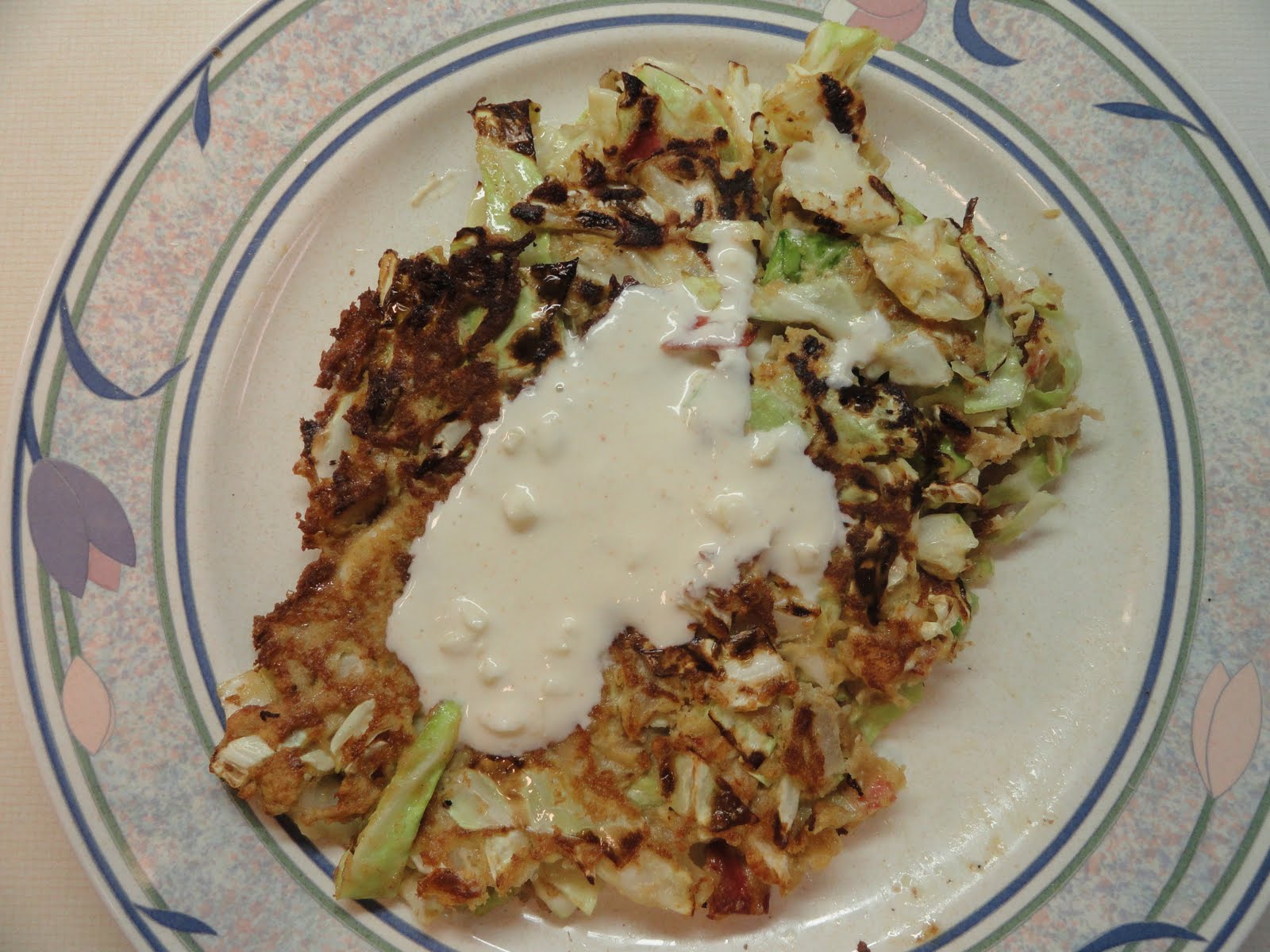
Cabbage cake (similar to potato hash browns) with spicy yogurt aioli.

Friday, September 23, 2011

Tuesday, September 20, 2011

Today's Roadside Forage

Freshly found road tomatoes - Two good'uns and a "leaker"...

Thursday, September 15, 2011

Chestnuts - Yes, But Not Roasting on an Open Fire

Yesterday, I was fortunate enough to spot a couple of chestnut trees growing on an abandoned property on my way into work. I was not quite sure how to prepare them other than roasting them on an open fire, but since Jack Frost has not yet started to nip at the noses of those in the Southeast, an open fire was nowhere to be found. After some experimentation, it seems that the easiest way to prepare a chestnut is to simply cut an "X" in the outer hull and boil for about 15 minutes. After sampling them both raw and cooked and realizing that their taste was rather bland, I correctly surmised that chestnuts can be successfully combined into more complex dishes where they will add their own subtle flavor and texture. This is evidenced in the pictured Sambuca shrimp and shallots with chestnuts in a cayenne and chive cream sauce. The wife, however, stated (incorrectly, I might add) that the dish was wonderful, EXCEPT for the chestnuts...

Tuesday, September 13, 2011

A Nice "Pear"

Rarely will you stumble across a comestible that looks as unappetizing as a prickly pear cactus. Nevertheless, both parts of the above-ground portion of this thorny BASTARD (try "picking" prickly pear pads without gloves and you will discover that you too have the propensity for uttering expletives once reserved for only the saltiest of sailors) are edible. While cacti are typically thought of as strictly denizens of the desert, prickly pears are commonly found both in the wild and sometimes not-so-wild ornamental landscape plantings throughout the foothills region. The pads, referred to south-of-the-border as "nopales", are actually quite tasty and make a yummy addition to the pictured Mexican-Malaysian-Foraging fusion dish of Shrimp and Eggplant Curry with Nopales and Dandelion Greens.

Wednesday, August 17, 2011

Mud Bugs in the Tub

While similar in appearance, mud bugs are far cheaper to nosh upon than their distant ocean cousins; the lobsters. These freshwater dwelling delicacies compare quite favorably to any edible ocean critter with a taste very much like shrimp. The best thing about mud bugs is that they can be harvested by the bucketful from most bodies of water in the foothills area. Any lake, pond, river or stream is literally crawling with these crustaceans and they can be easily be caught by hand, net or trap. I typically use a minnow trap that I purchased from Ace Hardware but a homemade trap would work just as well. In the evening, I simply remove several fish heads from the Ziploc bag that I keep hidden in the back of the freezer (hidden because I really do not want to see a big bag of frozen fish heads every time I reach for the ice cream); bait the trap; and toss it into the creek in my back yard. Early the next morning I am rewarded with a nutritious and hearty breakfast. If I am not particularly hungry for mud bugs with my waffles, they can be kept alive and saved for later in the sink or bathtub. Do not put them outside, even in a covered container. They will be gone when you return as they seem to be a magnet for raccoons who also consider them a delicacy. To cook, simply bring a pot of water to a rolling boil and drop them in – just like a lobster. After boiling for about five minute they are ready to eat. Simply break off the tails and peel like a shrimp. The large front claws also contain some edible meat but sometimes are not worth the effort unless they are exceptionally large. One of my favorite mud bug meals is a creamy chipotle crawfish alfredo over elbow macaroni (I always choose elbow macaroni because, for some reason or another, it is always about $0.25 cheaper per pound than the "premium" shapes). Down in the bayou, the locals swear that the best way to savor the subtle flavor of the mud bug is to “suck the head”. While I do admit to trying this twice (after more than one beer), I will never do it again...

Monday, August 1, 2011

The Elusive Road Cabbage – In Search of Some Seriously Succulent Snackage

If you drive through a rural area on your daily commute you are likely to come across the occasional farm truck flotsam and, no matter where you happen to reside, there is most definitely a particular crop that could be found in abundance just off the shoulder if you only knew how to spot these hidden gems. In Northeast Georgia (Rabun County to be exact), the typical find this time of year is the Road Cabbage. While many foraging neophytes obliviously zip right past a veritable feast each summer day, the technique for spotting these elusive orbs is actually quite easy to master. As we all know, cabbages are round, they roll, and sometimes a considerable distance from their initial point of impact on the roadway. Fortunately, this roundness also facilitates their propensity to exit speeding farm trucks on their way to the local market; and most particularly at sharp curves in the road. Thus, this vegetable is always readily available in roadside ditches during harvest season. These green globes of goodness are however very difficult to spot when hidden in tall roadside weeds as you drive past at highway speeds. Even so, if you know exactly what clues to look for, you will have no difficulty filling you larder with more cabbages than you would dare consume. You must keep a keen eye trained on the side of the roadway at each curve and when you spot a wilted outer cabbage leaf on the very edge of the pavement (see bottom photo), you can be sure that you are just a stone's throw (or a cabbage's roll) away from pay dirt. As the cabbage smacks the pavement at 55 MPH, the outer leaves explode from the more compact solid inner core and the center continues to roll in the direction of the truck formally hauling your quarry. Thus, as soon as you spot the outer leaves at the roadside, you can be certain that a succulent cabbage heart can be located approximately 30 yards down-road from your current location. Check out my photo montage of a recent successful hunt here. Happy harvesting…

Friday, July 29, 2011

Snakes on the Road

Apparently, all snakes are edible and quite tasty. Fortunately for any road forager gourmand they are also quite easily found pre-killed and ready for consumption on almost any rural roadway. You might be waiting for the "tastes like chicken" line but the truth is that snakes DO NOT taste like chicken. To anyone with a sophisticated palate and an appreciation for the subtleties provided by nourishment that has not been overly-processed and pumped full of hormones, antibiotics and additives, snake has a deliciously gamey flavor with undertones of fish. In order to savor this unique flavor, any recipe featuring snake should be only lightly spiced and not overcooked. For a simple recipe that also shows how incredibly easy it is to skin and gut your reptilian roadkill, check out this YouTube video. A snakeskin belt, a wallet, a pair of snazzy slippers AND dinner - What a fantastic find!!!

Thursday, July 28, 2011

Dell Food Dehydrator Gets Rave Reviews From Do-It-Yourself Tea Drinker

While Ingles' Laura Lynn brand tea bags (the tagless variety) will only set you back $1.00 for 100 bags if you wait until they are on sale (the regular price is a barely affordable $1.50), FREE tea is so much better for your wallet as well as for your soul. One of my favorite WILD teas is New Jersey Tea (Ceanothus americanus L.). This plant is commonly found growing rampant in roadway ditches throughout the foothills region. Once the leaves have been thoroughly dried they can be crumbled and brewed with the same proportions of "just off the boil" water as store-bought teas. While I do own a conventional NESCO food dehydrator, a more convenient and "free" drying alternative was recently serendipitously provided to me. On my way to work, as I was scanning the ditches for edibles, I noticed a small patch of New Jersey Tea and picked a few sprigs to later dry and enjoy. Once at work, I placed my fortunate find on my Dell laptop and simply forgot about everything else as I quickly became absorbed in many interesting and challenging work-related activities. At the end of the day, much to my pleasure and astonishment, I found that the heat generated by the Dell had transformed my little green sprigs into wonderfully wilted versions of their former selves - ready to be made into a relaxing cup of tea. One note of WARNING - New Jersey tea does not contain caffeine...